Proposed Architecture

Solutions Architecture

Explore the 9 proposed technological touchpoints engineered to eliminate avoidable emergency delays.

Jump to Solution:
Solution Component 01

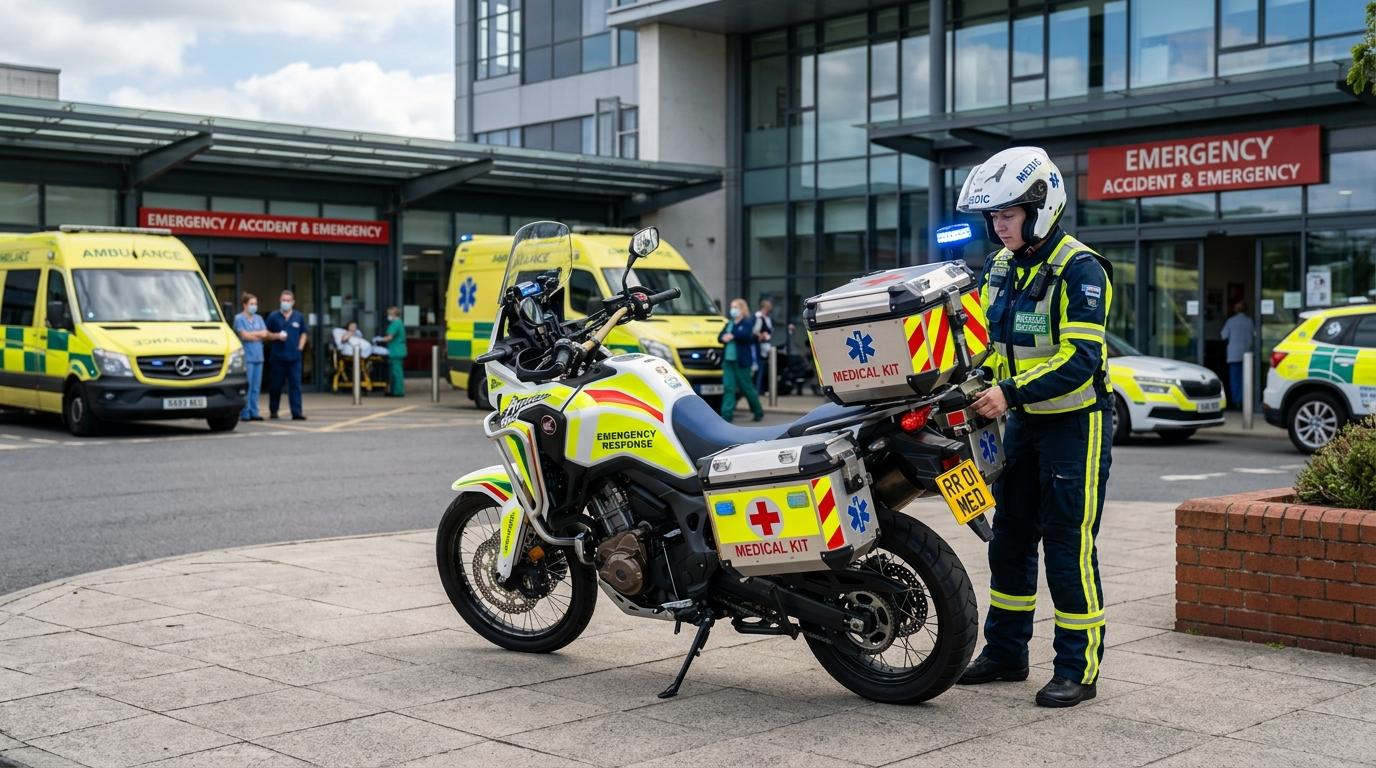
1. Rapid Emergency Response

Agile First-Arrival Paramedic Capability
Proposed Implementation
1. Rapid Emergency Response
Lifeline X Proposed Technology Demonstration
The Problem

Dense urban traffic, narrow arterial roads, and highway bottlenecks create critical transit delays for heavy 4-wheeled ambulances during the golden hour of trauma and resuscitation.

Proposed Solution

A proposed Rapid Emergency Response Bike engineered for agile first-response capability, enabling a trained emergency paramedic to arrive ahead of conventional vehicles to begin stabilization while coordinating ongoing care.

Technology Stack

GPS telemetry, ruggedized automated external defibrillator (AED), oxygen kit, cellular IoT data link to Command Center, and active traffic-aware dispatch.

Potential Benefit

Potentially decreases initial response latency in congested metropolitan sectors, providing vital minutes of early trauma and CPR intervention.
Solution Component 02

2. Ambulance Coordination

Unified Fleet Telematics & Dynamic Dispatch

Proposed Implementation
The Problem

Ambulance networks operate in fragmented silos with minimal cross-operator visibility, unpredictable ETAs, and disconnected radio communication with receiving facilities.

Proposed Solution

A proposed interconnected ambulance coordination layer connecting available public, private, and institutional emergency transport vehicles with the central Lifeline X operational hub.

Technology Stack

Cloud telematics, automated proximity algorithms, real-time vehicular telemetry, and secure bidirectional hospital handoff streaming.

Potential Benefit

Enhanced resource utilization, coordinated transfer protocols, and continuous situational visibility for families and dispatchers.

Solution Component 03

3. Hospital Pre-Alert

Zero-Turnaround Trauma Bay Readiness

Proposed Implementation
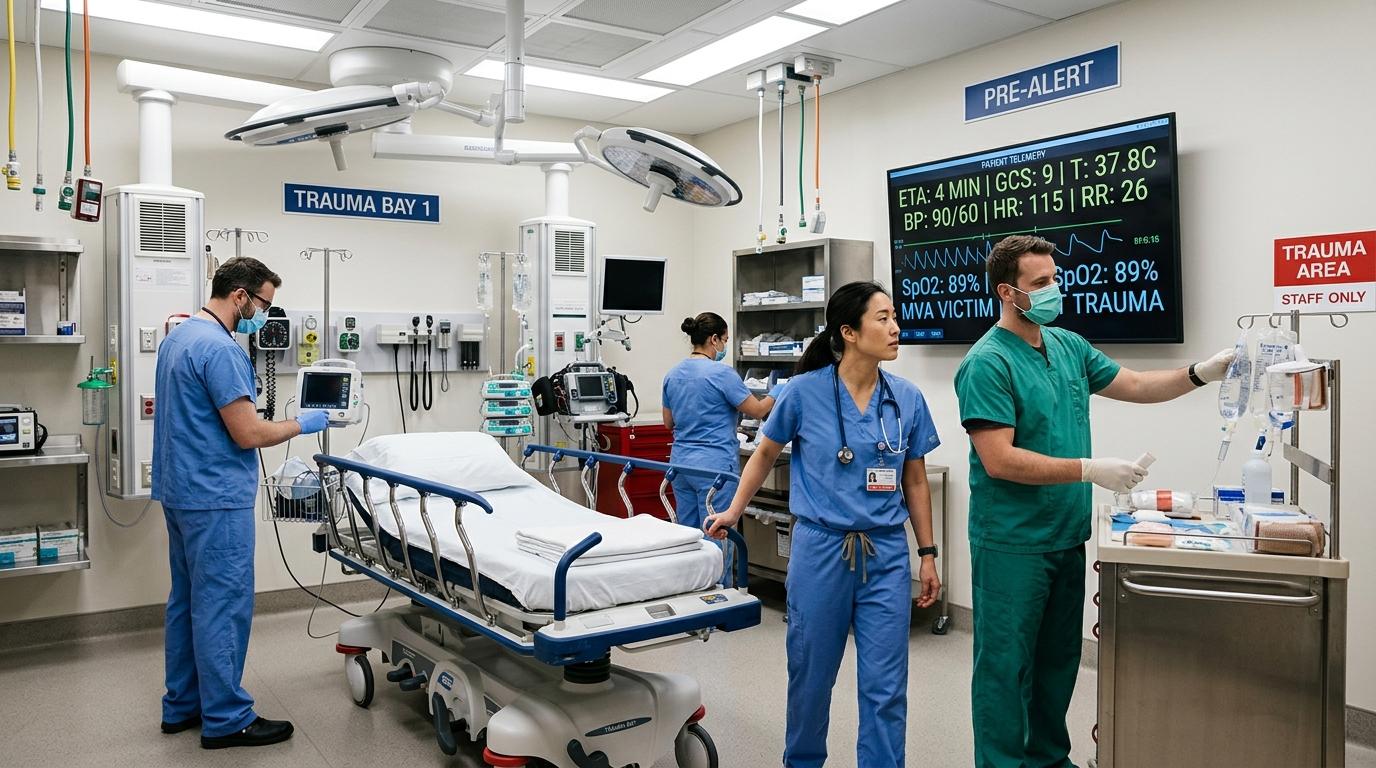
3. Hospital Pre-Alert
Lifeline X Proposed Technology Demonstration
The Problem

Emergency rooms frequently receive severe polytrauma, stroke, and cardiac patients with near-zero advance notice, causing frantic triage preparation delays upon patient arrival.

Proposed Solution

Designed to support structured, authorized transmission of patient vital signs, suspected clinical presentation, and estimated arrival time directly to the receiving hospital prior to arrival.

Technology Stack

Role-based authenticated APIs, HL7/FHIR compliant telemetry payloads, encrypted transit channels, and dedicated trauma bay alert monitors.

Potential Benefit

Enables trauma teams to prepare resuscitation bays, ready blood crossmatches, and pre-activate catheterization labs before patient wheels touch the bay.

Solution Component 04

4. Smart Emergency Routing

Dynamic Road Condition Optimization

Proposed Implementation
The Problem

Commercial GPS systems optimize for standard passenger vehicles and fail to account for road width restrictions, emergency vehicle turning radii, or dynamic medical facility capacity.

Proposed Solution

Proposed smart emergency routing algorithms tailored specifically to emergency vehicle dimensions, real-time municipal road conditions, traffic density, and hospital trauma readiness.

Technology Stack

Real-time GIS traffic feeds, custom vehicle profile parameters, predictive transit modeling, and dynamic rerouting telemetry.

Potential Benefit

Potentially more reliable and efficient transit corridors between incident scenes and appropriate medical facilities.

Solution Component 05

5. Digital Emergency Health Profile

Consent-Controlled Vital Medical Data

Proposed Implementation
The Problem

In critical unconscious emergency situations, responders lack basic baseline data: blood group, critical drug allergies, chronic cardiac conditions, or emergency family contacts.

Proposed Solution

A proposed secure digital emergency health profile accessible only in active verified emergency situations under strict authorization and encryption protocols.

Technology Stack

End-to-end encryption, multi-factor consent verification, zero-knowledge architecture, and role-based paramedic credentialing.

Potential Benefit

Provides attending clinicians with vital medical safeguards—preventing severe allergic reactions and speeding informed intervention.

Solution Component 06

6. AI Health Assistant

Intelligent Triage & Healthcare Navigation

Proposed Implementation
The Problem

During early emergency onset or uncertain medical distress, patients and bystanders experience severe panic, confusion, and delay in seeking appropriate levels of care.

Proposed Solution

An AI-assisted health information and triage navigation tool designed to assist users in identifying symptom severity, guiding basic CPR/first-aid steps, and connecting with emergency services.

Technology Stack

Medical knowledge language models, evidence-based triage decision trees, natural language query processing, and localized healthcare service directory.

Potential Benefit

Clear guidance in moments of confusion. Crucially: AI is intended to assist—not replace—qualified healthcare professionals and registered medical practitioners.

Solution Component 07

7. Medical Resource Coordination

Connecting Blood Banks, Pharmacies & Labs

Proposed Implementation
The Problem

Emergency surgeries and rare poisonings frequently stall while attendants manually call multiple blood banks and specialized pharmacies searching for units or antivenom.

Proposed Solution

A proposed resource discovery and coordination architecture linking institutional pharmacies, certified blood banks, and diagnostic labs to central emergency dispatchers.

Technology Stack

Distributed inventory querying, cold-chain transport handshake, verified medical credential exchange, and priority logistics courier routing.

Potential Benefit

Rapid location and coordinated transit of life-saving blood products and critical antidotes during time-critical surgeries.

Solution Component 08

8. SMCTM (Cold Chain Transport)

Active Peltier Cold Transport Technology

Proposed Implementation
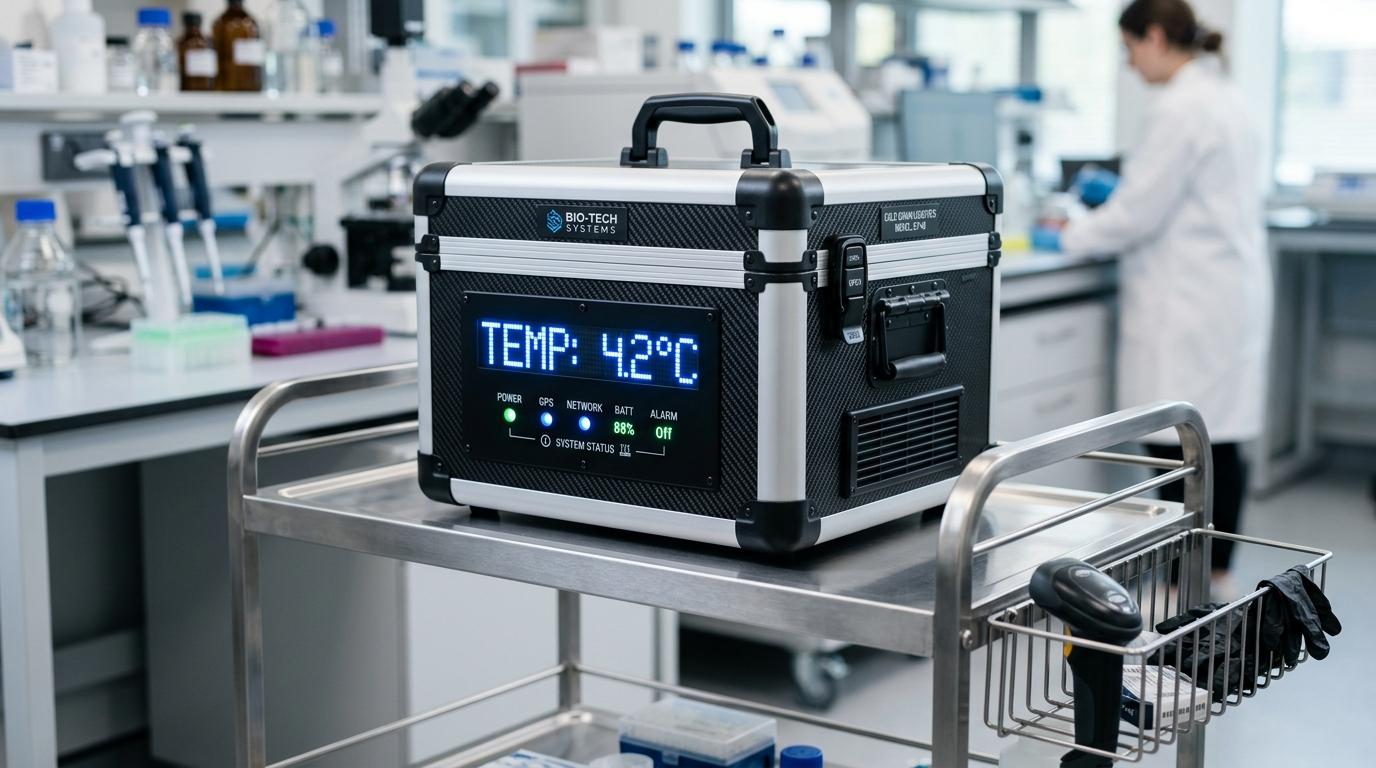
8. SMCTM (Cold Chain Transport)
Lifeline X Proposed Technology Demonstration
The Problem

Standard ice-box transport for vaccines, biologicals, and donor organs is vulnerable to temperature spikes, ice melt, vibration, and undetectable transit spoilage.

Proposed Solution

The Smart Medical Cold Transport Module (SMCTM)—a developing hardware prototype with active thermoelectric temperature control (+2°C to +8°C), GPS tracking, and anti-tamper sensing.

Technology Stack

Dual Peltier cooling modules, digital PT100 thermal probes, cellular IoT telemetry, LiFePO4 battery reserve, and continuous Command Center synchronization.

Potential Benefit

Guarantees traceable, verifiable thermal integrity for vulnerable biological materials across challenging urban transit.

Solution Component 09

9. Central Command Center

Unified Operational Control Matrix

Proposed Implementation
9. Central Command Center
Lifeline X Proposed Technology Demonstration
The Problem

Emergency medical coordination in India currently lacks a single unified pane of glass connecting citizen requests, first-response bikes, ambulances, and hospital triage bays.

Proposed Solution

A proposed central emergency operations interface orchestrating real-time incident queues, automated priority triage, vehicle telematics, and trauma bay notifications.

Technology Stack

High-concurrency cloud backend, real-time WebSocket telemetry streams, GIS mapping layers, and automated clinical protocol triggers.

Potential Benefit

Provides flight-control-level situational awareness across municipal emergency operations, eliminating communication blind spots.

Development & Regulatory NoticeAll solutions described are developing concepts. Technical architectures, clinical workflows, data privacy frameworks, and integration parameters are subject to ongoing engineering validation, institutional healthcare agreements, and applicable regulatory compliances.